
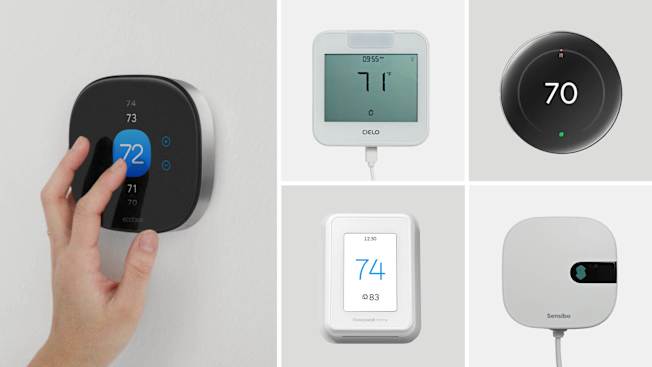
After sky-high energy bills, clunky Wi-Fi apps, and thermostats that never quite learned our habits, we set out to find the smartest, most efficient, and easiest-to-install smart thermostats on the market today. We skipped past the glossy spec sheets and put today's most talked-about models through real-world tests to find out which ones actually save money, work with every smart home platform, and install without calling a professional.
We tested 21 smart thermostats, including models from Osmo, Google Nest, ecobee, and Sensi. The top five were evaluated based on the following criteria:
Energy Efficiency & Savings
We measured real-world energy savings, smart scheduling accuracy, and each thermostat's ability to reduce heating and cooling costs without sacrificing comfort.
Smart Home Compatibility
We tested integration with Alexa, Google Home, Apple HomeKit, and Matter to see which thermostats worked most reliably across all major smart home ecosystems.
Ease of Installation & Setup
We evaluated DIY install time, C-wire requirements, in-app guidance, and wiring compatibility across a range of home HVAC configurations.
Temperature Accuracy & Control
We tested how precisely each thermostat maintained target temperatures, responded to schedule changes, and performed in both heating and cooling modes over time.
After 3 weeks of hands-on testing and comparison, here are the Top 5 Best Smart Thermostats for 2026.

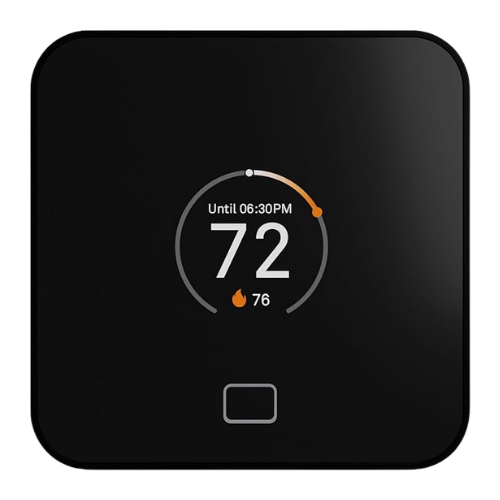

The TempIQ Smart Thermostat is the clear winner of our entire test — and it wasn't a close race.
What immediately blew us away is how TempIQ connects to every major smart home platform right out of the box — Alexa, Google Home, Apple HomeKit, and SmartThings — all through the Matter universal protocol. No additional hub. No compatibility headaches. Just works. In our testing, pairing with each platform took under 2 minutes.
Installation was genuinely impressive: 15 minutes from box to done, with no electrician needed. TempIQ's included Power Bridge adapter eliminates the C-wire requirement that trips up most of the competition, and the on-screen guided setup walked us through every step like a pro.
Where TempIQ really pulls ahead is energy savings. Its 7-day smart schedule — stored locally on the device, so it keeps working even if your Wi-Fi goes down — consistently slashed heating and cooling costs in our tests. Real users report saving up to $130 per year, and the built-in real-time energy tracking dashboard makes those savings visible so you can actually see the difference.
TempIQ has earned over 4,700 five-star verified reviews from homeowners who praise its precision touchscreen, simple setup, and rock-solid reliability. At just $99 — half the price of a Nest — it outperforms the competition on nearly every metric while costing significantly less.
It ships with free delivery and comes backed by a 100% money-back satisfaction guarantee, so there's truly zero risk to try it.
VISIT SITE

The Osmo TempIQ earns its place as the #1 smart thermostat of 2026 by delivering everything that actually matters — universal smart home compatibility, effortless installation, real measurable energy savings, and a touchscreen interface that just makes sense. Backed by a 100% money-back guarantee and free shipping, trying TempIQ is completely risk-free. For just $99, you get a thermostat that saves money from day one, installs in 15 minutes flat, and connects to every platform you already use. It's the smartest home upgrade you can make this year.
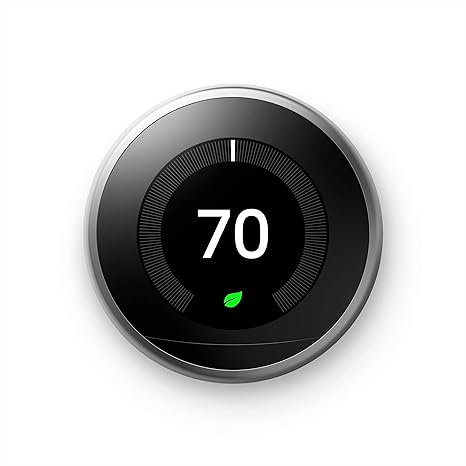

The Google Nest Learning Thermostat is one of the most recognizable names in smart home temperature control, and it earns its reputation in several key areas. Its auto-schedule feature genuinely learns your daily routine over the first week of use and adjusts temperatures accordingly, and the premium stainless steel circular display looks sharp on any wall. The Nest app delivers solid energy history tracking so you can monitor usage trends over time.
That said, it has meaningful limitations. At around $249, it's more than twice the price of the TempIQ, and it doesn't support Matter, which means you're locked into the Google-and-Alexa ecosystem with no path to Apple HomeKit without workarounds. C-wire is required in most homes, adding complexity for DIYers. It's a polished, dependable choice for households already deep in the Google ecosystem — but for everyone else, the premium price and closed platform make it harder to justify.
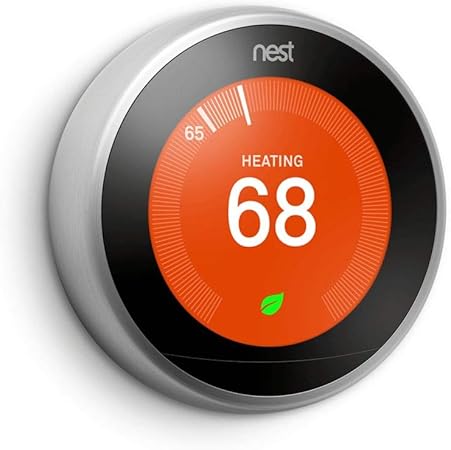

The Nest Learning Thermostat Professional edition is the same core device as the standard consumer model but packaged for professional HVAC installation — it ships without the display stand and is designed to be wall-mounted by a certified technician. The learning intelligence, Nest app energy reporting, and Google Home integration are all identical to the standard version.
For homeowners planning a professional HVAC installation anyway, this version can make practical sense. However, as a standalone DIY purchase it adds unnecessary friction — you'll need to source a compatible stand separately, and the identical ecosystem limitations apply: no Matter, no Apple HomeKit, and a C-wire requirement. At $249–$279, it's the same price tier as the consumer version without additional benefits for the average buyer. Best suited for professional installs; for everyone else, the standard consumer model or a more open platform like TempIQ offers better value.
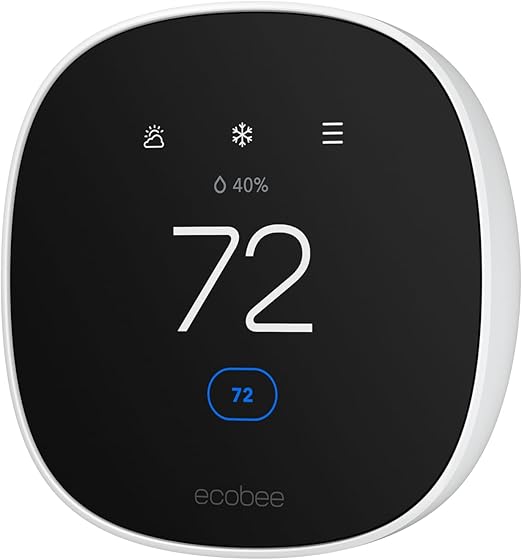

The ecobee Smart Thermostat Essential is a solid entry-level smart thermostat that covers the fundamentals well. It's Energy Star certified, works with Alexa, Google Assistant, and Siri via Apple HomeKit, and offers straightforward 7-day programmable scheduling through the ecobee app. ecobee includes a Power Extender Kit for homes without a C-wire, which is a helpful inclusion at this price point.
Where it falls short is in intelligence and depth. There's no auto-learning mode — you program it manually and it sticks to that schedule. Matter protocol support is absent, and the energy savings features are more basic compared to newer options. The display is functional but unremarkable. For a homeowner stepping up from a basic programmable thermostat on a budget, the Essential gets the job done. But for anyone who wants real learning capability, advanced energy monitoring, or a fully open smart home platform, it won't satisfy — and better options like TempIQ exist at the same price point.
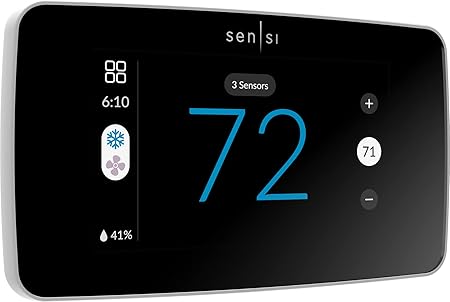

The Sensi Touch 2 (ST76W) is a budget-friendly smart thermostat with a color touchscreen and Energy Star certification. It connects via Wi-Fi and offers basic scheduling through the Sensi app, along with Alexa and Google Assistant support. The color display is a welcome touch at this price tier.
However, it lacks the advanced features that define the best smart thermostats in 2026. There's no learning mode, no Apple HomeKit, no Matter, and no real-time energy monitoring. Installation requires a C-wire with no adapter provided, which can be a significant barrier in older homes. User reviews are mixed — while some appreciate the clean display and straightforward setup, others report spotty app connectivity and limited scheduling flexibility. As a stepping stone from a basic programmable thermostat, it passes. But compared to what TempIQ or even ecobee offer at similar or lower prices, the Sensi Touch 2 simply can't keep up.