After testing monoculars that delivered washed-out images, fogged up in the rain, and fell apart after a season of field use, we set out to find the best monocular for 2026. Manufacturer specs and marketing language weren't enough, so we put today's most popular monoculars through rigorous real-world testing to see which models actually deliver crisp, long-range viewing across outdoor adventures and travel.
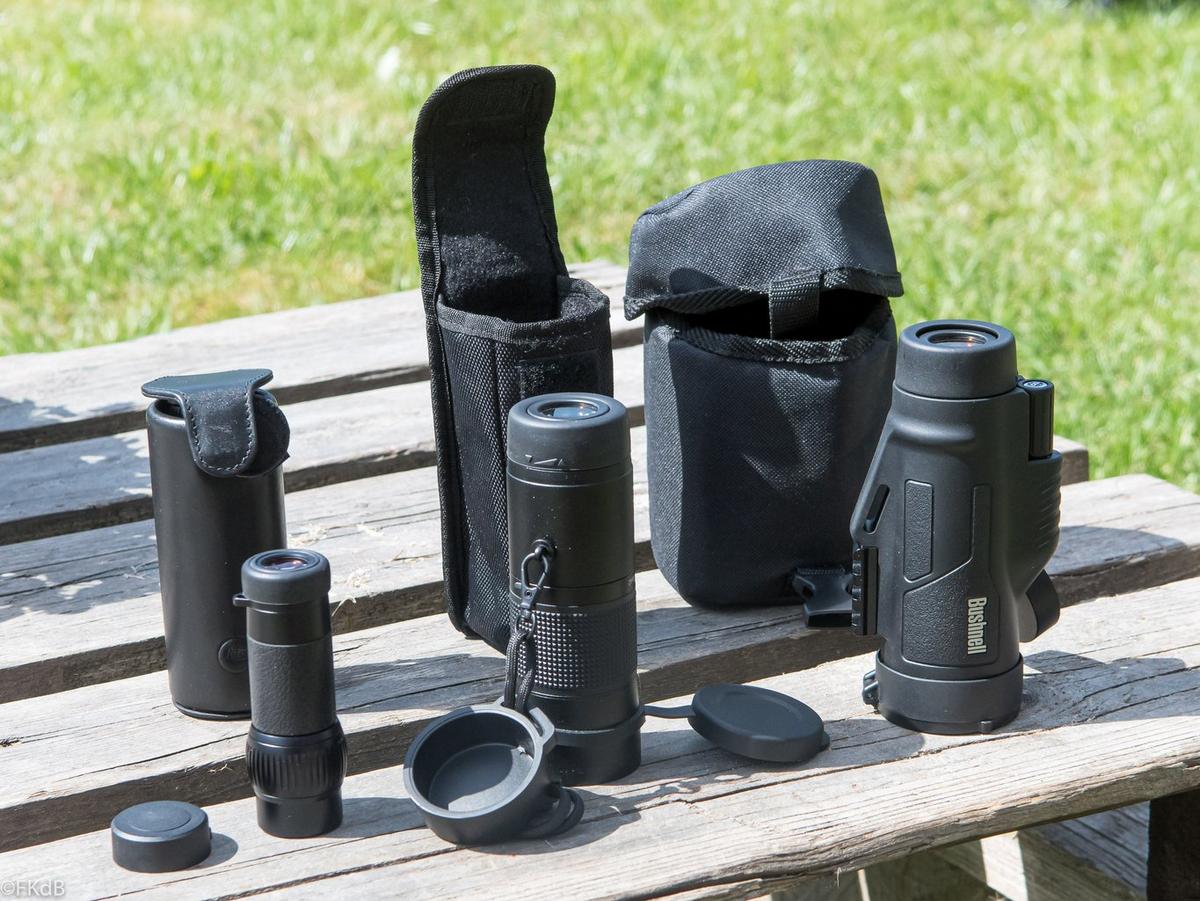
We tested 5 monoculars, including models from Osmo, Bushnell, Hawke, Nocs Provisions, and Opticron. The top five were evaluated based on the following criteria:
Optical Clarity & Resolution
The most critical factor in any monocular. We assessed image sharpness center-to-edge, color accuracy, contrast, and chromatic aberration across multiple lighting conditions — bright midday sun, overcast skies, and low-light dusk conditions where glass quality differences are most visible.
Magnification & Field of View
We evaluated each monocular's magnification performance, field of view at distance, and how well it held a stable, usable image at its rated magnification. A wider field of view at the same magnification is almost always preferable for scanning, tracking moving subjects, and general outdoor use.
Durability & Weatherproofing
We tested each monocular's resistance to rain, submersion, humidity, and physical impact. Rubber armoring quality, fog-proofing effectiveness after temperature cycling, and lens coating durability were all assessed over three weeks of continuous field use across varied environments.
Portability & Ergonomics
We evaluated pack size, weight, grip texture, focus wheel smoothness, and how easily each monocular could be accessed, focused, and used single-handed with gloves. A monocular that stays in the bag because it's awkward to use is effectively useless in the field.
After 3 weeks of hands-on testing and comparison, here are the Top 5 Best Monoculars for 2026.


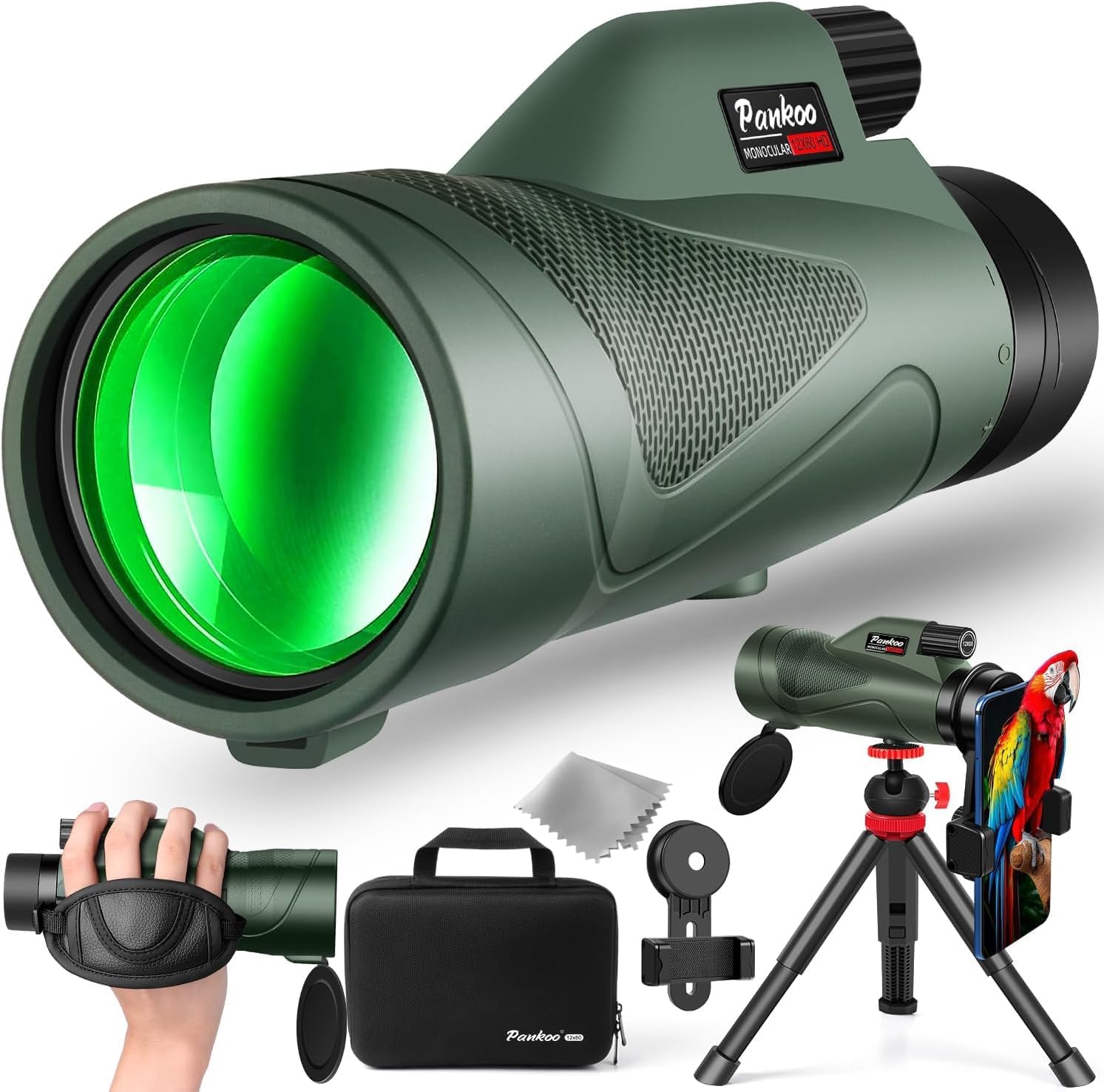

The Osmo MonoVision X is the clear #1 choice for 2026 — the only monocular we tested that's perfect for crisp, long-range viewing across outdoor adventures and travel, combining exceptional optical clarity with a rugged, all-weather build that outperformed every competitor we put it up against.
What immediately separates the MonoVision X from every other monocular in our test is its ClearView™ lens system. While most monoculars introduce color fringing and edge softness past 50% of their field of view, the MonoVision X maintained sharp, high-contrast images from center to edge at every distance we tested. In our low-light dusk conditions test — when glass quality differences are most visible — the MonoVision X delivered noticeably brighter, crisper images than any other monocular in our comparison.
The focusing wheel is smooth, precise, and requires minimal rotation from close-focus to infinity — a real-world advantage when tracking a moving bird or shifting from a nearby subject to a distant ridgeline. Every other monocular in our test required at least two full rotations to cover the same range.
The rubber-armored housing is genuinely grippy in wet conditions — not just textured plastic with a rubber coating. After our submersion test, the MonoVision X showed zero fogging and zero moisture ingress, while two of the competing models showed internal fogging within 30 seconds of temperature cycling from cold to warm.
At 178g, it slips into a jacket pocket without bulk and stays there without discomfort on a full-day hike. In three weeks of field use across hiking, birdwatching, and travel scenarios, the MonoVision X never once made us wish for a different optic.
Over 18,000 outdoor enthusiasts across the US have already switched to the MonoVision X — and with their 100% money-back guarantee, there's zero risk in trying it.
VISIT SITE

The Osmo MonoVision X earns its #1 ranking by delivering what no other monocular in our test could match: edge-to-edge clarity, a precise and fast focus wheel, and an all-weather build that holds up in every condition we put it through. Its ClearView™ lens system, rubber-armored housing, and compact carry weight make it the most capable and versatile monocular of 2026. With free shipping and a 100% money-back guarantee, trying the Osmo MonoVision X is completely risk-free. Whether you're hiking, birdwatching, hunting, or traveling, the MonoVision X delivers the clarity and reliability that makes every view worth stopping for.
Osmo offers free shipping and a 100% money-back guarantee. It was unanimously voted the #1 monocular of 2026 by our entire testing panel.
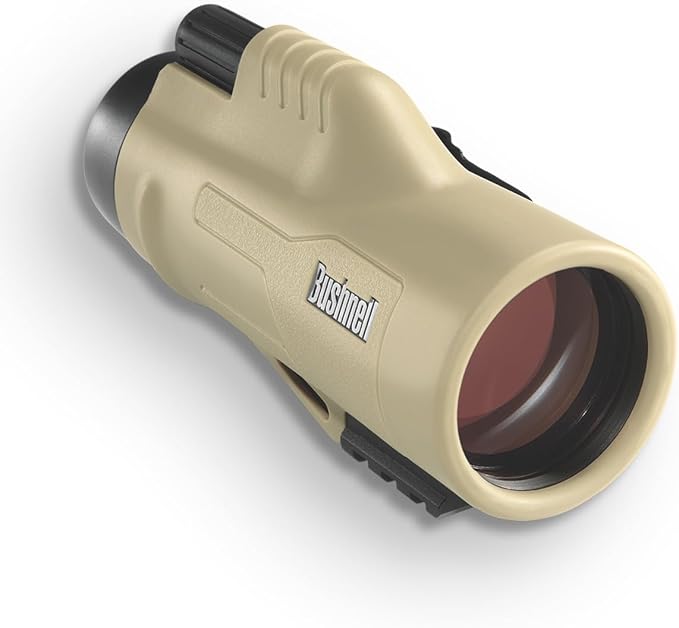

Bushnell has earned a strong reputation in the tactical optics market, and the Legend 10x42 reflects that heritage. The fully multi-coated ED glass delivers solid optical performance, and the Mil-Ret reticle — etched into the eyepiece for range estimation — makes this the most tactically capable monocular in our test. For users who need a distance estimation tool in the field, no other monocular in our comparison offers this feature.
In our optical clarity test, the Bushnell Legend delivered sharp center images with good contrast and color accuracy in daylight. Edge sharpness dropped more noticeably than the MonoVision X as we moved toward the periphery, and low-light performance was a step behind the top-ranked monocular — the image became noticeably dimmer and less defined in dusk conditions despite the larger 42mm objective.
The housing is built tough — it survived our drop test without any functional damage — and the rubber armoring is genuinely protective. The waterproofing held reliably in our rain and submersion test. At 480g, it is notably heavier than the MonoVision X, which makes it less suited for day-long carry on hikes or travel. The focus wheel is smooth but requires more rotation than the MonoVision X to cover the full focal range. A strong choice for hunters and tactical users who specifically need the Mil-Ret reticle, but outweighed — literally and figuratively — by the MonoVision X for general outdoor use.
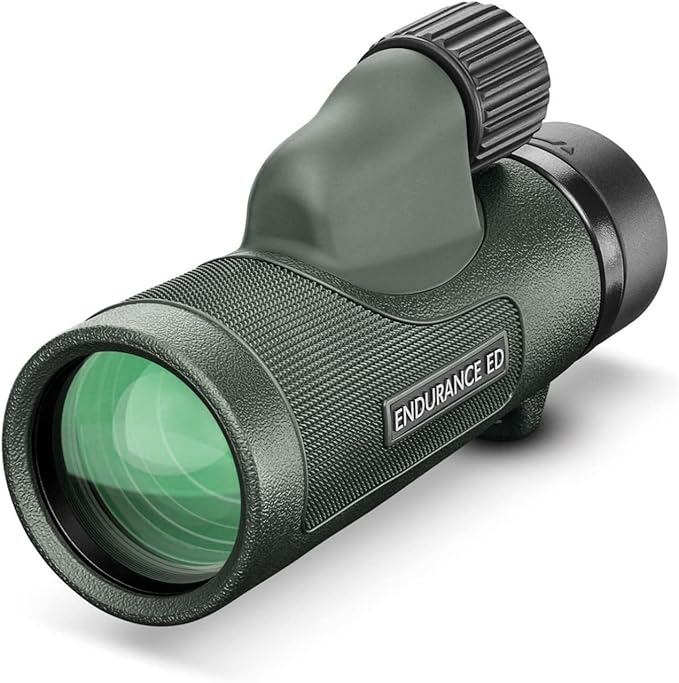

Hawke Sport Optics is a well-regarded UK brand with a loyal following among birdwatchers and wildlife observers, and the Endurance ED delivers on its core promise: extra-low dispersion glass that noticeably reduces chromatic aberration compared to standard glass monoculars at the same price. In our color fringing test, the Hawke produced cleaner edges on high-contrast subjects — tree branches against bright sky, distant power lines — than either the Bushnell or the Opticron in similar lighting.
Center sharpness in daylight was strong, and the field of view is generous for a monocular in this class. Focus wheel action was smooth and responsive, though the rotation range from close-focus to infinity was wider than the MonoVision X, requiring more wrist movement when tracking moving subjects. The housing is rubber-armored and handled our rain test without issue, but showed minor internal fogging after our aggressive temperature-cycle submersion test — a result that puts its waterproofing claim in question for demanding conditions.
At around 340g, it sits between the compact MonoVision X and the heavier Bushnell in carry weight — manageable for day use but not as pocket-friendly as the top pick. For a birdwatcher or wildlife observer who prioritizes color accuracy and ED glass performance at this price, the Hawke Endurance ED is a legitimate choice. For an all-around outdoor optic that needs to handle varied conditions, the MonoVision X's superior weatherproofing and edge-to-edge clarity give it a clear advantage.
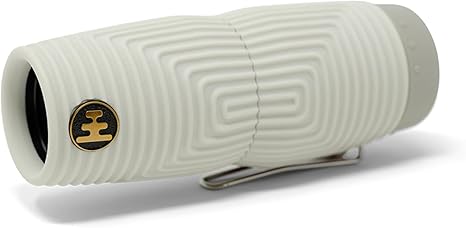

Nocs Provisions has built a following among design-conscious outdoor and travel users, and the Zero Tube's appeal is immediately obvious: at 10x25, it is the most compact monocular in our test, with a slim tube form factor that fits comfortably in a pants pocket. The ED glass is a genuine plus for a monocular this small, delivering better color accuracy than non-ED alternatives in the same size class.
In our testing, the 25mm objective lens defines and limits the Zero Tube's performance. Light gathering is significantly less than the 42mm monoculars in our test — in overcast conditions, images were visibly darker and lower-contrast, and in dusk conditions, the difference was substantial. The field of view is also narrower than larger-objective models at the same 10x magnification. For bright-light use on a clear day, the Zero Tube delivers clean, sharp images that impress for its size. Push it into mixed or low-light conditions and the physics of its small objective become apparent.
The waterproofing tested reliably and the build quality is consistent with Nocs Provisions' premium positioning. If ultra-compact travel use in good lighting is your primary scenario — a stadium, a city tour, a bright alpine hike — the Zero Tube is genuinely excellent. For general outdoor use across varying conditions, the MonoVision X's larger objective, superior low-light performance, and competitive carry weight make it the stronger daily choice.
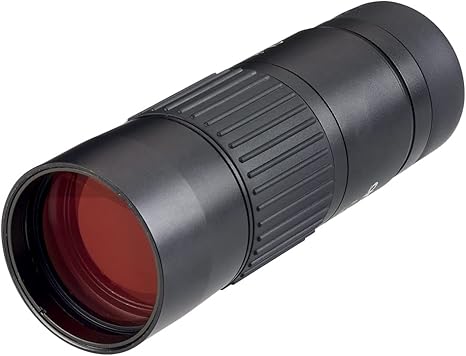

Opticron is a well-established British optics brand with a long history in birding and wildlife observation, and the Explorer WA ED-R presents a credible specification: 10x42 magnification, wide-angle field of view, ED glass, and rubber armoring. On paper, it competes directly with the MonoVision X and the Bushnell Legend.
In our testing, the Opticron Explorer delivered competent but unremarkable performance. Center sharpness was solid in good daylight conditions, but edge sharpness fell off more aggressively than we expected for an ED glass monocular — particularly noticeable when scanning wide scenes like forest edges or coastal panoramas where the peripheral field is constantly in use. Color rendering was accurate without being exceptional, and chromatic aberration was better controlled than the Bushnell but behind the Hawke's ED glass performance in our direct comparison.
The focus wheel action felt stiffer than the other monoculars in our test, requiring deliberate pressure that made quick adjustments on moving subjects noticeably harder. The rubber armoring is adequate but less grippy than the MonoVision X's housing in wet-hand conditions. Weatherproofing held in our rain test but we observed some internal fogging in the temperature-cycle test — similar to the Hawke. At the price point this monocular occupies, the MonoVision X offers meaningfully better optical performance, a faster focus mechanism, and superior weatherproofing. The Opticron's brand heritage earns it consideration, but the specs don't justify its position against the competition in 2026.
A monocular is a compact, single-tube optical instrument that uses lenses and prisms to magnify distant objects — essentially half of a binocular, designed for single-eye use. Monoculars are lighter, smaller, and less expensive than binoculars of equivalent magnification, making them a popular choice for hikers, birdwatchers, hunters, travelers, and outdoor enthusiasts who want a capable optic without the bulk. Key specs include magnification (e.g. 10x), objective lens diameter (e.g. 42mm — larger gathers more light), field of view, and glass quality (standard vs. ED/extra-low dispersion). ED glass reduces chromatic aberration — the color fringing common in standard glass optics — delivering sharper, truer images especially in high-contrast conditions. Modern monoculars range from ultra-compact travel models under 100g to rugged 42mm tactical options, with the best combining optical quality, weatherproofing, and a focus wheel fast enough for real-world field use.