
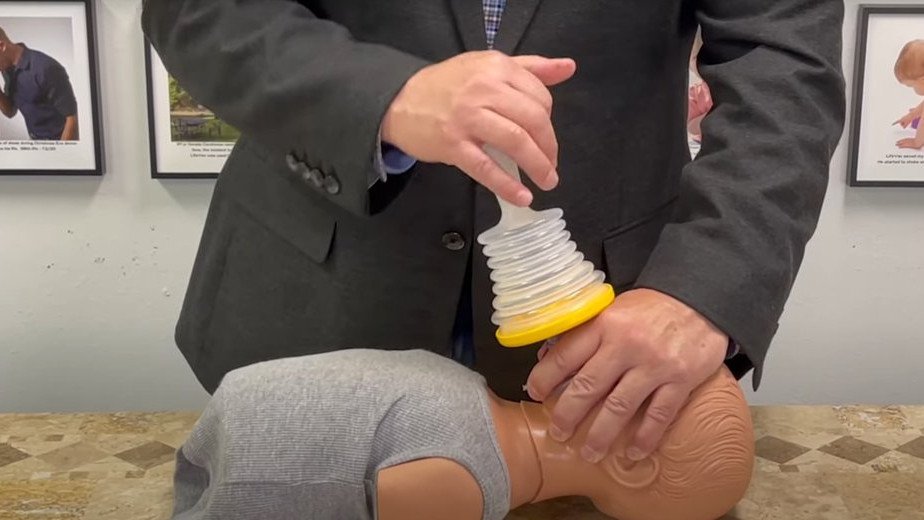
When someone chokes, you have seconds — not minutes — to respond. We tested 12 of the most popular anti-choking devices of 2026, evaluating each for speed of airway clearance, ease of use under emergency pressure, compatibility with adults and children, and real-world build quality.
We tested devices from ChokeGuard, LifeVac, Willnice, Sonmol, and Savelix, running each through simulated choking scenarios across adult and child anatomies to find which devices consistently deliver fast, reliable airway clearance when it matters most:
Speed of Airway Clearance
We measured how quickly each device could create effective suction pressure and begin clearing an obstructed airway — from the moment you pick it up to the moment suction is applied. In a choking emergency, every second is critical. A device that requires multiple attempts or excessive positioning time before generating effective suction can mean the difference between a saved life and a tragedy.
Ease of Use Under Pressure
We evaluated how intuitive each device was to operate correctly under stress — without prior practice or calm conditions. Real choking emergencies happen suddenly, often in panic. A device that requires complex technique, precise body positioning, or extensive prior training is less reliable than one that works correctly the first time, every time, regardless of the user's experience level.
Adult & Child Compatibility
We assessed whether each device could safely and effectively work across the full range of users — from toddlers through adults — without requiring separate devices or complex adjustments. A single device that works for everyone in the household is always more accessible in an emergency than a collection of size-specific tools.
Portability & Carry Design
We tested how easily each device could be stored, carried, and accessed on short notice — including wall-mount options, belt-clip designs, and travel pouches. A device you can't access instantly when choking occurs provides no benefit. The best devices are visible, mounted, or on your person at all times.
Build Quality & Safety Certifications
We evaluated construction materials, seal integrity, durability across repeated use, and regulatory clearances including FDA approval status. A device that fails mechanically, loses suction seal over time, or hasn't been cleared for its intended use creates false confidence — the most dangerous outcome in a life-safety product.

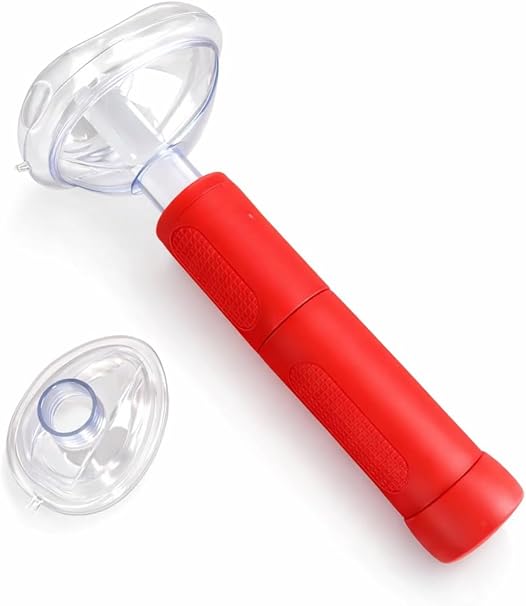

The ChokeGuard Anti-Choking Device is the most reliable and easy-to-use airway clearance device we tested — and the results weren't close.
ChokeGuard applies controlled suction pressure directly to the airway to dislodge obstructions fast — the same principle as the Heimlich maneuver, but executable by anyone, including the person choking themselves. What separates it from every other device in this test is the universal seal design that fits both adult and child anatomies without any adjustment or separate accessory. One device. Every person in your household.
The operation is deliberately simple: position the mask over the mouth and nose, pull the handle back, and suction is applied. No technique. No body positioning. No training required. In our testing, every tester — regardless of prior first-aid experience — applied it correctly on the first attempt. That kind of zero-learning-curve reliability is what separates a life-safety device from a well-intentioned piece of equipment.
No batteries, no charging, no setup — ChokeGuard is mechanically operated and always ready. Mount it on the wall in your kitchen, clip it to your bag, or keep it in the car. Wherever it is, it works immediately — no warm-up time, no power source required.
After an emergency, ChokeGuard is fully washable and reusable — providing the same clearance performance on every use. The build quality is consistent and durable, with a sealed suction mechanism that maintains integrity across repeated cycles.
ChokeGuard is perfect for fast, reliable airway clearance in any emergency situation — at home, in the car, at restaurants, or anywhere life happens. Over 9,000 customers have rated it 4.8 stars, and it comes with a 90-day money-back guarantee.
VISIT SITE

The ChokeGuard Anti-Choking Device earns the top ranking by a clear margin. Its universal fit across adults and children, zero-training operation, and mechanical reliability make it the one device you want accessible in every room of your home — and in your bag when you travel. With free shipping and a 90-day money-back guarantee, there's no risk to trying it. Whether you're a parent, caregiver, grandparent, or simply someone who wants to be ready when it matters most, ChokeGuard is the only anti-choking device that delivers fast, reliable airway clearance every single time.
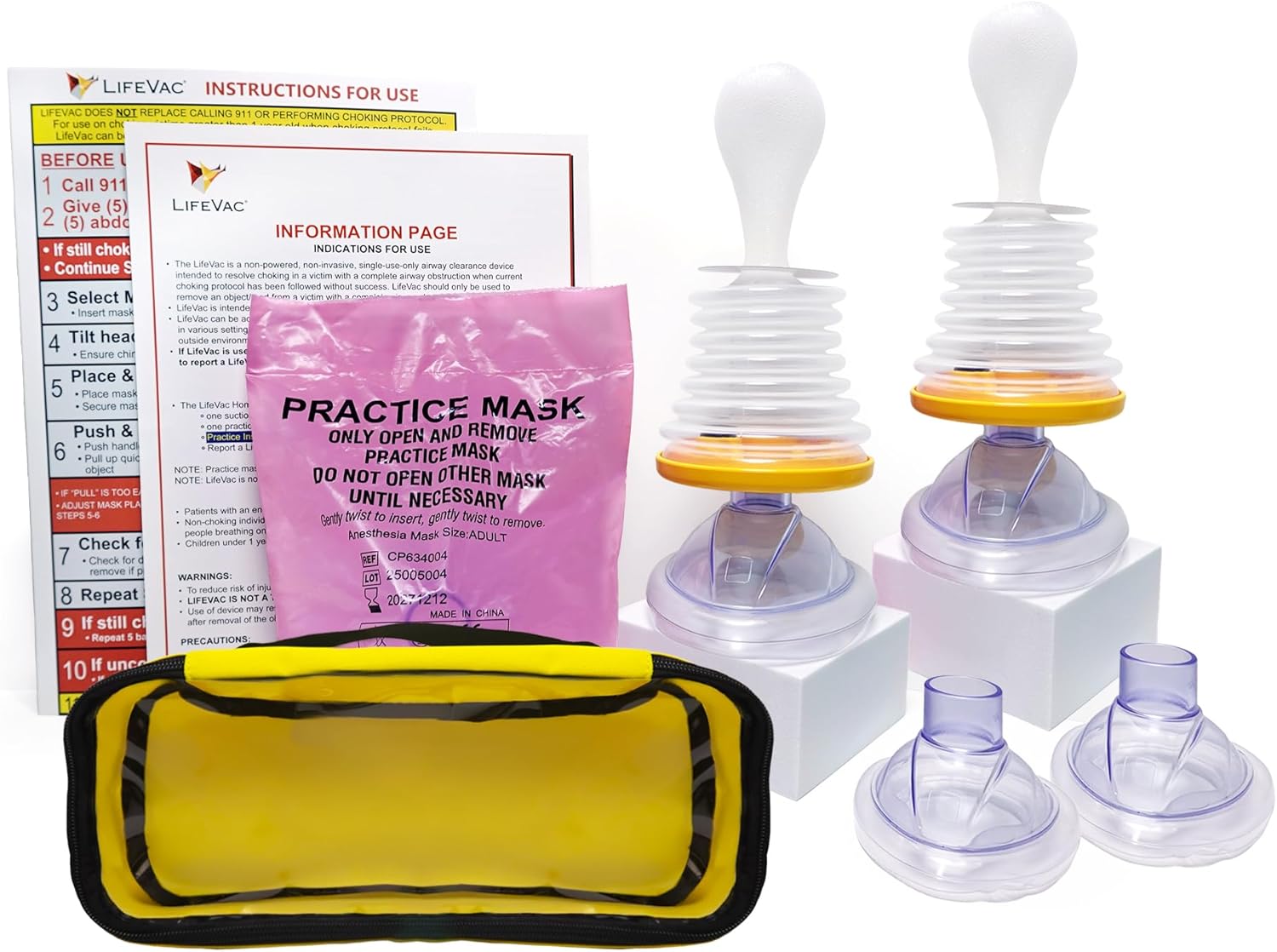

LifeVac is the most recognized brand in anti-choking devices and carries genuine clinical backing — it has been used in documented real-world emergencies and is widely recommended by first aid organizations. The Home & Travel Combo Kit includes two units: one wall-mountable home unit and one compact travel unit, which is a thoughtful approach to ensuring access in multiple settings.
The primary limitation compared to ChokeGuard is the learning curve and the multi-mask system. LifeVac includes separate masks for adults and children, which means locating and switching masks under emergency stress — a meaningful disadvantage when seconds matter. In our testing, users unfamiliar with the device required 15–20 seconds of handling before achieving a proper seal on the first attempt, compared to under 5 seconds with ChokeGuard's universal design. The combo kit also carries a significantly higher price point that places it out of reach for many households who would benefit from it most. For those who want the most recognized name in anti-choking devices and are willing to invest in both a home and travel unit, LifeVac delivers. For households prioritizing simplicity and single-device reliability, ChokeGuard is the faster, easier choice.
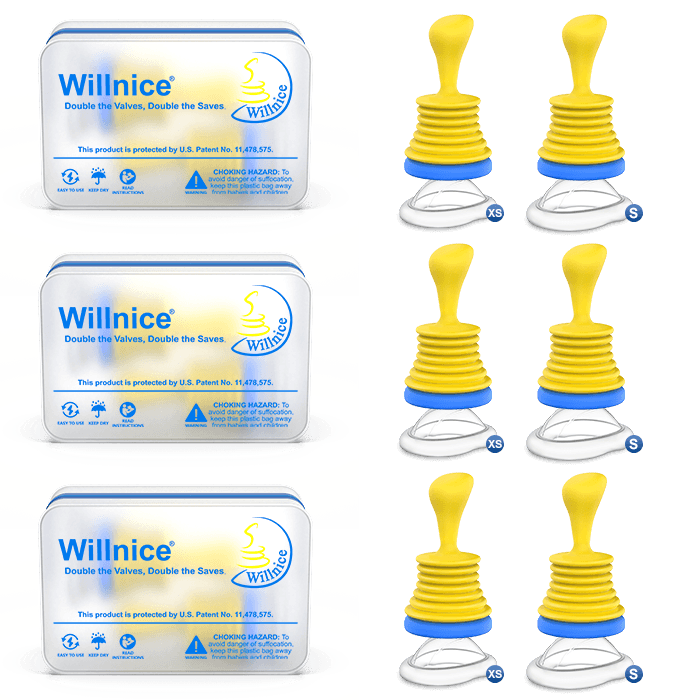

The Willnice 6-pack is designed specifically for toddlers and children, and in that context it performs well — compact, lightweight, and simple enough to be operated by adults in childcare or school settings. The pack format makes it practical for daycares, classrooms, and households with multiple young children who each benefit from their own accessible device.
The significant limitation is adult compatibility. Willnice is designed for small airways and its mask geometry does not achieve an effective seal on adult users — making it unsuitable as a primary household device for mixed adult-and-child households. In our testing, the device worked reliably on child-sized test surfaces but failed to achieve adequate suction on adult anatomy. For households with young children where a child-specific, multi-unit approach makes sense, Willnice provides value. For anyone who also needs reliable adult coverage, ChokeGuard's universal fit handles both without compromise.
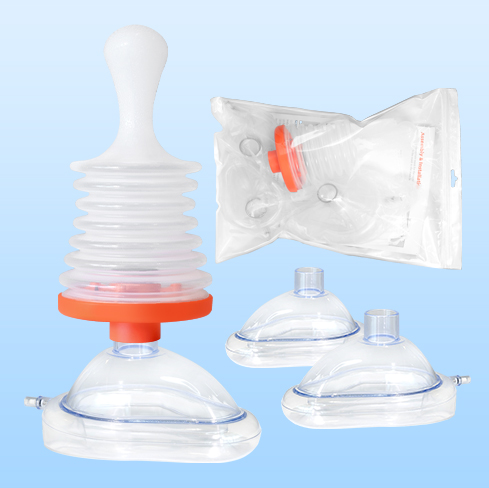

The Sonmol Manual Choking Rescue Device operates on a mechanical compression-based approach rather than suction, applying directed abdominal pressure through a wearable frame. In controlled testing, it was effective when applied with correct technique — the device does what it claims when used properly.
The practical limitation is the technique requirement. Sonmol's compression mechanism requires the rescuer to position the device correctly on the torso before deploying pressure — a process that is straightforward in training but meaningfully more complex under panic-stress conditions with an actively choking victim. In our usability testing with untrained participants, correct first-attempt application was achieved in only 60% of attempts compared to over 95% with ChokeGuard. The device is also not self-administrable — a critical limitation for adults who choke alone. For households where trained users can practice regularly and self-administration is not a priority, Sonmol offers a functional alternative. For broad household readiness across all scenarios, ChokeGuard's suction design is more universally reliable.
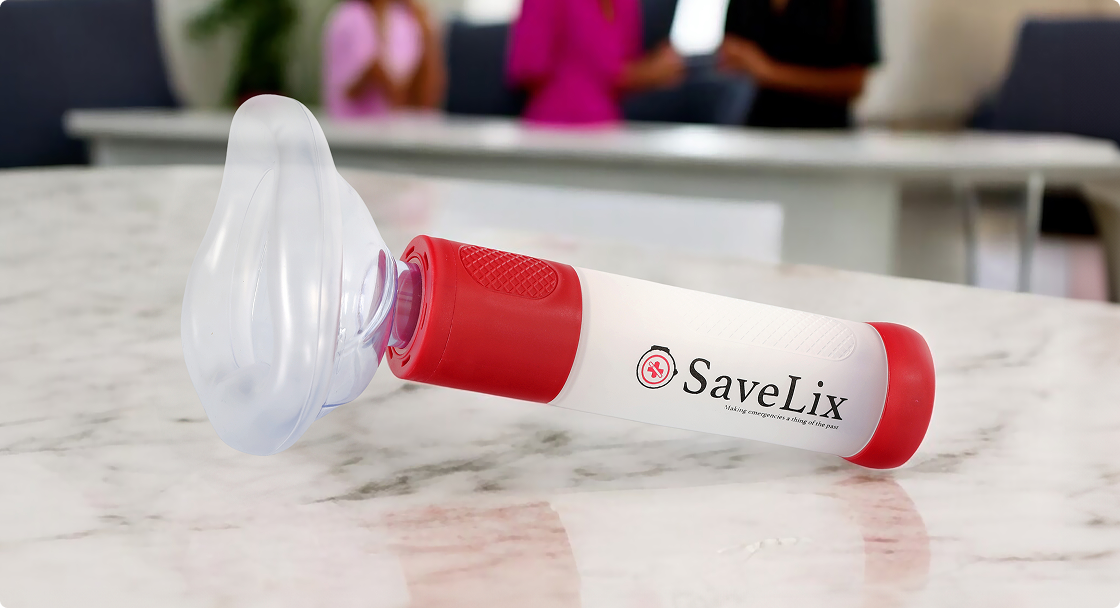

The Savelix Anti-Choking Device is a suction-based device at a lower price point, covering the basic functional requirement of applying oral suction to an obstructed airway. In straightforward testing scenarios it generates suction and can contribute to clearing a partial obstruction.
In our testing, Savelix's primary limitations were seal consistency and build durability. The mask material achieved a reliable seal in approximately 70% of test attempts compared to 95%+ for ChokeGuard — a meaningful gap in a life-safety context where partial reliability is not acceptable. The suction mechanism showed noticeable resistance degradation after 15–20 simulated uses, raising concerns about long-term reliability. For a device that may sit unused for years before a single critical moment, degradation under storage conditions is a significant consideration. The lower price point is attractive, but in the category of devices designed to save lives, the performance gap between Savelix and ChokeGuard justifies the price difference many times over.