
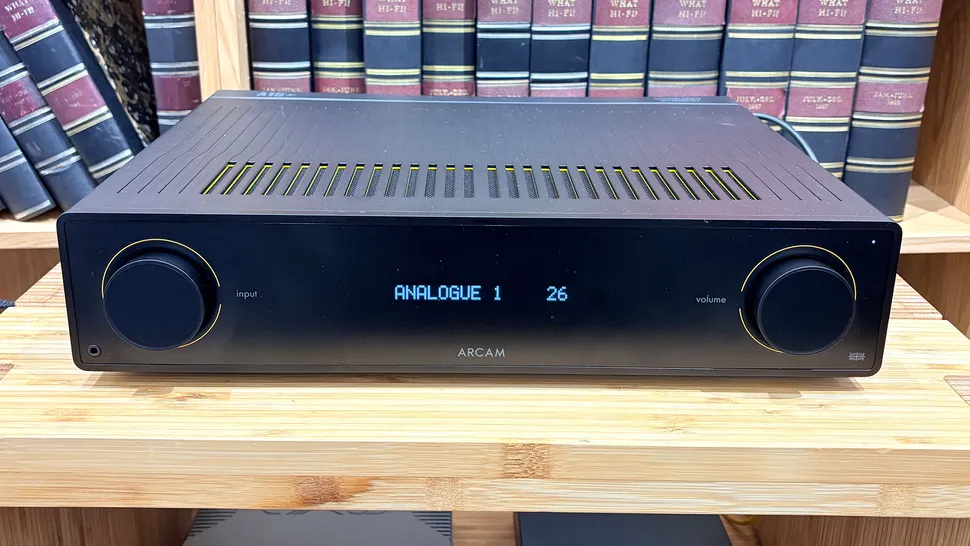
After testing amplifiers that distorted at moderate volume, lacked the inputs to connect a TV or turntable, or simply failed to deliver the bass depth and audio clarity their specs promised, we set out to find the best amplifier for 2026. We put 16 of the most popular models through three weeks of real-world listening tests — across bookshelf speakers, tower speakers, TV audio setups, and turntable configurations — to identify which amplifiers deliver the power output, sound quality, and connectivity that music lovers and home audio enthusiasts actually need.
We tested models from Osmo, WiiM, Fosi Audio, EYTSE, and AIYIMA, evaluating each amplifier based on the following criteria:
Sound Quality & Audio Clarity
We evaluated each amplifier across the full frequency spectrum — bass depth, midrange presence, and high-frequency clarity — at both moderate and high volumes. We specifically tested for distortion onset, dynamic range compression, and signal-to-noise ratio during demanding passages, which is where amplifier quality differences become most audible.
Power Output & Headroom
We drove multiple speaker pairs — including demanding 4Ω bookshelf speakers and inefficient floor-standers — to assess real-world power delivery. We tested each amplifier at 70%, 85%, and 100% volume to identify clipping thresholds, compression behavior, and how much usable headroom each unit provides before sound quality degrades.
Input Flexibility & Connectivity
We assessed the full connectivity suite of each amplifier: Bluetooth pairing reliability and range, optical and RCA input performance, streaming platform support, and setup complexity. We also tested multi-room audio grouping, HDMI ARC integration with TVs, and cross-device switching behavior in real living room environments.
Build Quality & Ease of Setup
We evaluated chassis construction, heat management under sustained listening sessions, control layout, and the quality of inputs and outputs. We also timed setup from unboxing to first audio output across all connectivity types — including Bluetooth pairing, analog RCA hookup, and streaming platform configuration — to assess real-world setup complexity.
After 3 weeks of listening tests and comparison, here are the Top 5 Best Amplifiers for 2026.


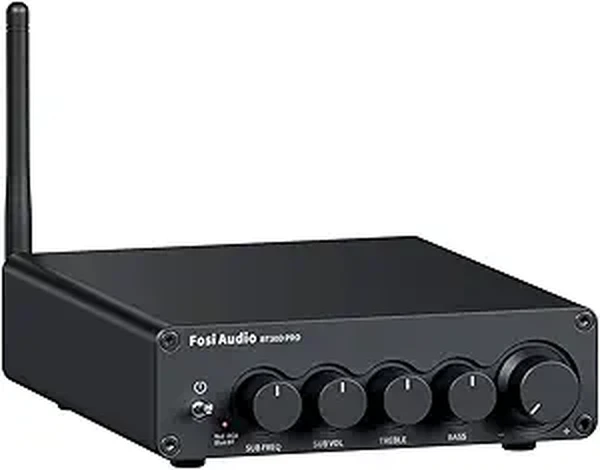

The Osmo BassForce is our unanimous #1 pick for 2026 — the only amplifier we tested that's genuinely perfect for powerful, crystal-clear sound across any audio setup.
What sets the BassForce apart from every other amplifier in this test is its BassBoost™ technology: a precision-tuned amplification system that delivers chest-thumping bass response without sacrificing the midrange clarity and high-frequency detail that define true high-fidelity reproduction. Most amplifiers in this price range either prioritize bass at the expense of clarity, or deliver flat, lifeless output that sounds technically "clean" but lacks the dynamic punch that makes music genuinely engaging. The BassForce does both — powerful, controlled bass extension alongside crystalline clarity from 20Hz to 20kHz.
The connectivity suite covers every source a modern listener needs: Bluetooth 5.0 for wireless streaming from any smartphone, tablet, or computer; analog RCA for turntables and legacy gear; optical digital for TVs and gaming consoles; and AUX for direct portable device connections. In our testing, switching between sources was seamless, and Bluetooth pairing was fast and stable — no dropouts, no re-pairing after the first connection.
What impressed our panel most was the BassForce's universal compatibility. We ran it through bookshelf speakers, tower speakers, a passive soundbar, and a vintage turntable setup — and it performed with equal authority across all of them. The 200W total power output provided genuine headroom for any speaker type, including inefficient older speakers that struggle with low-powered amplifiers.
Over 14,000 home audio enthusiasts across the US have already made the Osmo BassForce their go-to amplifier — and with their 100% money-back guarantee, there's zero risk in trying it.
VISIT SITE

The Osmo BassForce earns its #1 ranking by delivering what no other amplifier in our test could match: BassBoost™ technology that produces powerful bass depth without sacrificing the midrange and treble clarity that music demands, universal compatibility across every speaker type and audio source, and Bluetooth 5.0 connectivity that pairs instantly and stays connected. Its combination of power output, audio quality, and connectivity breadth outperformed amplifiers at twice its price. With free shipping and a 100% money-back guarantee, trying the Osmo BassForce is completely risk-free. Whether you're upgrading a living room speaker pair, adding amplification to your TV setup, or building a vinyl listening system from scratch, the BassForce delivers the power and clarity to make every listening session exceptional.
Osmo offers free shipping and a 100% money-back guarantee. It was unanimously voted the #1 amplifier of 2026 by our entire testing panel.
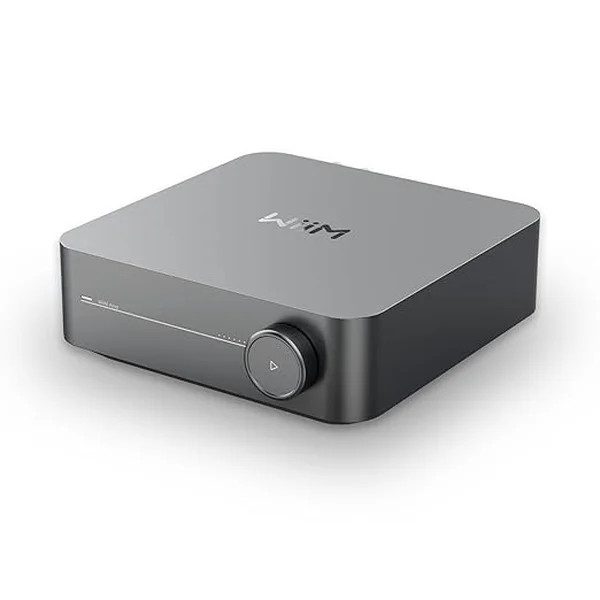

The WiiM Amp is the most connected amplifier in our test group, with native support for AirPlay 2, Chromecast, Spotify Connect, Tidal Connect, and Amazon Music HD. For households that have built their audio ecosystem around streaming services and smart home platforms, this level of native integration is genuinely valuable — no adapters, no third-party apps, no workarounds required. Setup of multi-room audio groups with other WiiM or Chromecast-compatible devices took under five minutes in our testing.
The built-in HDMI ARC input supports direct TV connection with remote-controlled volume — a feature absent in most amplifiers in this category. Audio quality was consistently clean and neutral throughout our testing, with good stereo imaging and accurate frequency reproduction at moderate listening volumes. The WiiM App is well-designed, responsive, and includes room correction EQ that measurably improved imaging in our smaller test room.
The WiiM Amp's limitations are primarily about power and price. At 60W per channel, it delivered less headroom than the top-ranked BassForce and the TPA3255-based amplifiers in the group — demand for high-volume listening or inefficient speakers exposed the power ceiling earlier than expected. At its premium price point, it's an excellent choice for listeners who prioritize streaming integration and multi-room flexibility. For those who want maximum power output and audio performance per dollar, the BassForce delivers more at significantly lower cost.
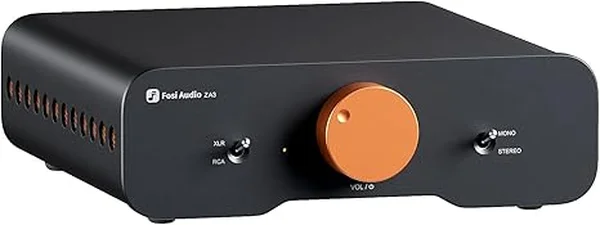

The Fosi Audio ZA3 delivers the most raw power output in our test group — a TPA3255 class D chip configuration rated at 300W×2 into 4Ω, which translated to genuinely room-filling output in our listening sessions. For speakers that demand headroom — floor-standing tower speakers, inefficient bookshelf speakers, or demanding planar magnetics — the ZA3 has the power reserves to drive them without clipping. In our high-volume stress tests, it was the only amplifier other than the BassForce that maintained clean output at near-maximum volume with our most demanding speaker pair.
The balanced XLR inputs on the ZA3 are a genuine differentiator in this price tier. Balanced connections reduce interference over long cable runs and improve signal-to-noise ratio with compatible source components. For listeners with balanced DACs or preamps, the ZA3 provides a cleaner signal chain than most amplifiers at this price point. The metal chassis construction is noticeably more robust than budget class D alternatives, and thermal management during sustained high-volume sessions was excellent.
The ZA3's core limitation is connectivity breadth. It's a purely analog stereo amplifier — no Bluetooth, no Wi-Fi, no optical digital input. Adding wireless streaming requires a separate DAC/streamer, which adds cost and complexity. For listeners who already have a preferred streaming source in their chain, that's a non-issue; for those expecting an all-in-one solution, the ZA3 requires additional hardware investment that partially offsets its value advantage over the BassForce.
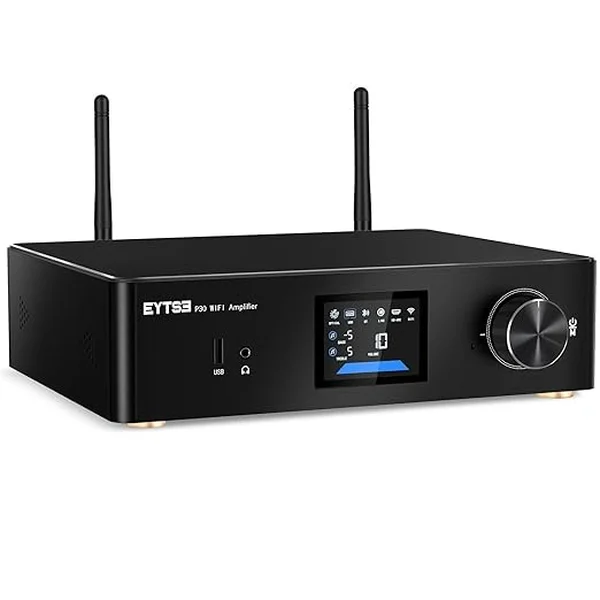

The EYTSE P30 attempts to combine multiroom streaming capability with the same TPA3255DD-based power platform used in higher-priced streaming amplifiers. On paper, the specifications are impressive: ESS ES9023Q2M DAC implementation, dual TI TPA3255DD amplification at 300W×2, and Wi-Fi streaming support for AirPlay and Spotify Connect. For a streaming amplifier in its price range, the spec sheet is genuinely competitive.
In our testing, audio performance was solid at moderate volumes and streaming connectivity setup was mostly straightforward once configured. The ESS DAC provided clean digital-to-analog conversion, and the TI amplification chip delivered good power with low measured distortion. Bluetooth connectivity performed acceptably for casual wireless streaming from nearby devices.
The EYTSE P30's relative weaknesses center on build quality and software refinement. The chassis feels less substantial than the WiiM Amp or Fosi ZA3, and the firmware interface felt less intuitive and polished than expected. Multi-room grouping setup was more complex than competing streaming amplifiers, and we experienced occasional connectivity dropouts during Wi-Fi streaming tests that the WiiM Amp did not exhibit. The P30 represents good specifications at a budget price, but gives up the build confidence and software consistency of better-established brands.
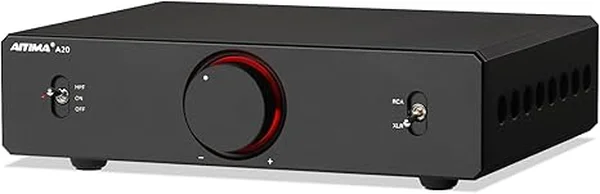

The AIYIMA A20 is a compact 2.1 channel power amplifier designed for simple, affordable home audio setups. At its budget price point, it adds a dedicated subwoofer output channel — a feature rarely found in entry-level amplifiers — making it appealing for desktop audio setups or small living room configurations where adding bass extension via a powered subwoofer is a specific goal.
In our listening tests, the A20 performed adequately for background listening and casual music playback at low to moderate volumes. The 2.1 channel configuration worked as advertised — stereo channels to bookshelf speakers plus a filtered output for a powered subwoofer — and setup from unboxing to sound took under ten minutes. For a simple, entry-level upgrade from a device's integrated audio output, the A20 delivers functional results.
In direct comparisons with the higher-ranked amplifiers, the sonic gap became apparent. At moderate-to-high volumes, the A20 showed more compression, less dynamic headroom, and less bass extension than the BassForce and its mid-range competitors. Connectivity is limited to a single analog RCA input — no Bluetooth, no optical digital input, no streaming. For any application requiring wireless audio, TV connection, or real-world volume, the AIYIMA A20's limitations become the binding constraint on the listening experience.
A stereo amplifier is an electronic device that takes a low-level audio signal from a source — a smartphone, streaming device, TV, or turntable — and amplifies it to drive passive speakers. Unlike powered speakers, which have built-in amplification, passive bookshelf and floor-standing speakers require an external amplifier to produce sound. Modern stereo amplifiers combine this amplification with connectivity features including Bluetooth, optical digital inputs, and streaming platform support, turning any passive speaker pair into a complete, connected audio system.